
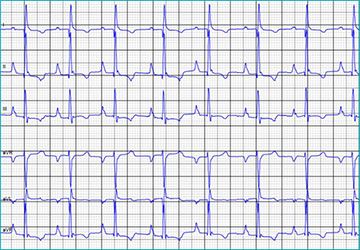
An electrocardiogram, commonly called an ECG or EKG, is a noninvasive diagnostic test that records the electrical activity responsible for each heartbeat. It provides valuable information about your pet’s heart rate and rhythm and can help identify electrical abnormalities that may not be apparent during a physical examination alone.
At Jog Lantana Animal Clinic, ECG recordings are submitted through IDEXX DRD for professional interpretation. The resulting report is reviewed by Dr. Miriam Delbene together with your pet’s physical examination, symptoms, medical history, medications, laboratory results, diagnostic imaging, and reason for testing.
When May an ECG Be Recommended?
An electrocardiogram may be appropriate when your dog or cat:
- Has an unusually fast, slow, or irregular heart rhythm
- Has an abnormal rhythm detected during a physical examination
- Experiences fainting, collapse, weakness, or unexplained exercise intolerance
- Has breathing changes that may be associated with heart disease
- Has a heart murmur accompanied by a suspected rhythm abnormality
- Has radiographic or ultrasound findings that require further rhythm evaluation
- Is receiving medication that may affect heart rate or rhythm
- Has a known cardiac condition that requires monitoring
- Is undergoing preanesthetic evaluation as part of JLAC’s preventive safety protocol
An ECG may also be recommended even when a patient has no previously diagnosed heart disease or detectable heart murmur. Some electrical abnormalities produce few or no outward signs, making preventive evaluation especially valuable before anesthesia.
What Happens During an ECG?
Your pet is positioned comfortably while small contact electrodes are gently attached to the limbs and, when needed, the chest area. These electrodes record the heart’s electrical signals; they do not send electricity into the body.
The recording itself is generally brief and painless. Most pets do not require sedation. Because movement, panting, trembling, or anxiety can interfere with the tracing, our team will help your pet remain as calm and comfortable as possible during the procedure.
What Can an ECG Tell Us?
An ECG can help evaluate:
- Heart rate
- Regularity of the heartbeat
- The origin and conduction of electrical impulses
- Abnormally fast or slow rhythms
- Premature or irregular heartbeats
- Rhythm changes associated with certain illnesses, electrolyte abnormalities, or medications
- Electrical findings that may influence monitoring or anesthetic planning
- Changes that may require additional cardiac evaluation
Some rhythm abnormalities occur intermittently and may not appear during a short recording. If your pet’s symptoms continue despite an apparently normal ECG, additional monitoring or diagnostic testing may be recommended.
Professional Interpretation Through IDEXX DRD
After the ECG tracing is recorded at JLAC, it is submitted through IDEXX DRD for professional interpretation. The report provides an assessment of the recorded rhythm and may include recommendations for additional evaluation, patient monitoring, or anesthetic management when appropriate.
Dr. Delbene has found these professional recommendations especially helpful when choosing or modifying anesthetic medications for individual patients. The report becomes one part of a broader safety assessment and helps our medical team design an anesthetic plan based on the patient rather than relying on a single standard protocol.
Preventive ECG Screening Before Anesthesia
At JLAC, an ECG is commonly incorporated into the preanesthetic evaluation of patients approximately six to seven years of age and older, even when no heart murmur, rhythm abnormality, or cardiac disease has previously been diagnosed. Depending on the patient’s breed, medical history, physical examination, planned procedure, and other risk factors, an ECG may also be recommended at a younger age.
This preventive approach may identify an unsuspected rhythm or electrical abnormality before anesthesia. It also provides professionally interpreted information that can help Dr. Delbene:
- Select anesthetic medications appropriate for the individual patient
- Avoid or modify medications that may be less appropriate for a particular rhythm
- Adjust the anesthetic protocol when indicated
- Plan the appropriate level of cardiovascular monitoring
- Determine whether additional cardiac evaluation should be completed before proceeding
- Decide whether the procedure can proceed as planned or should be postponed
An ECG does not eliminate every anesthetic risk and does not replace the physical examination, preanesthetic blood testing, or other diagnostics when indicated. It adds another important layer of information to JLAC’s individualized approach to anesthetic safety.
What an ECG Cannot Show
An ECG evaluates electrical activity; it does not provide a complete picture of the heart’s physical structure or pumping function. It cannot independently determine the cause of every heart murmur, accurately measure all heart chambers, or replace an echocardiogram when structural heart disease is suspected.
Depending on your pet’s findings, additional evaluation may include:
- Blood pressure measurement
- Laboratory testing
- Chest radiographs
- An echocardiogram or scheduled cardiac ultrasound
- Longer-term rhythm monitoring
- Additional review or consultation by a veterinary cardiologist
Results and Recommended Next Steps
Once the IDEXX DRD interpretation is available, Dr. Delbene reviews the findings and any recommendations within the context of your pet’s complete medical picture. We will explain whether the results affect the planned anesthetic protocol or indicate a need for monitoring, treatment, additional testing, specialist consultation, or referral.
If a medication or treatment plan is started, a repeat ECG may be recommended to evaluate your pet’s response or monitor for changes over time.
Another Layer of Anesthetic Safety
Every patient responds differently to anesthesia. At JLAC, the anesthetic plan is developed according to the individual pet’s age, health, procedure, examination findings, laboratory results, ECG interpretation, and other relevant risk factors.
Our goal is to identify concerns before the procedure, use the information available to make thoughtful anesthetic decisions, and keep you informed about the recommendations made for your pet.
Request a Cardiac or Preanesthetic Evaluation
Healing Hands & Caring Hearts for Your Pets. It’s Our Promise to You!