
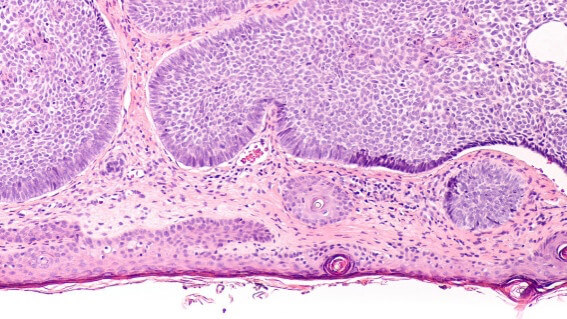
 Some skin diseases, persistent lesions, and masses cannot be identified reliably through physical examination alone. When routine testing does not provide enough information—or when a condition appears unusual—a skin biopsy can help us look deeper.
At Jog Lantana Animal Clinic, biopsy samples are submitted to a veterinary diagnostic laboratory, where a pathologist examines the tissue microscopically. Dr. Miriam Delbene then interprets the pathology findings together with your pet’s history, examination, previous treatments, laboratory results, and progression of the condition.
When May a Skin Biopsy Be Recommended?
A biopsy may be appropriate for dogs or cats with:
- Persistent or unusual skin lesions
- Sores, ulcers, crusts, or nodules that do not heal as expected
- Recurring disease that has not responded adequately to treatment
- Suspected autoimmune or immune-mediated skin disease
- Changes involving the nose, paw pads, claws, lips, or mucocutaneous areas
- Unexplained hair loss or abnormal skin architecture
- A skin mass or growth requiring microscopic identification
- A condition for which a more precise diagnosis would change the treatment plan
A biopsy is not necessary for every skin problem. Many common infections, parasites, and allergic conditions can initially be evaluated with cytology, skin scraping, fungal testing, dietary trials, or other less invasive methods.
How the Procedure Is Performed
The procedure is planned according to the location, appearance, size, and number of lesions being sampled. Depending on the patient and the type of abnormality, Dr. Delbene may recommend:
- A punch biopsy that removes a small, circular sample of skin
- An incisional biopsy that samples part of a larger lesion
- An excisional biopsy that removes an entire small mass or lesion
- More than one sample when lesions differ in appearance or stage
Local anesthesia, sedation, or general anesthesia may be used depending on the biopsy location, number of samples, patient comfort, and ability to remain still. Small sutures may be placed, and home-care instructions will be provided to protect the biopsy sites while they heal.
Preparing for a Skin Biopsy
Medications and topical products can sometimes alter the appearance of skin tissue under the microscope. Please tell us about all medications, injections, shampoos, creams, sprays, supplements, and previous treatments your pet has received.
Do not discontinue prescribed medication unless Dr. Delbene specifically instructs you to do so. The risks and benefits of changing treatment must be considered for each patient.
Whenever possible, avoid bathing, scrubbing, clipping, or applying topical products directly to the affected area before the appointment unless our team provides different instructions.
What Histopathology Can Tell Us
Histopathology examines the organization and characteristics of cells within the submitted tissue. Depending on the condition, it may help identify:
- Inflammatory patterns
- Autoimmune or immune-mediated disease
- Certain infections
- Abnormal tissue growth
- Benign or malignant tumors
- Changes that support or exclude particular diagnoses
Some pathology findings provide a specific diagnosis. Others identify a disease pattern that must be interpreted alongside the patient’s clinical history and additional test results. Occasionally, another biopsy, special staining, culture, or consultation with a veterinary dermatologist may be recommended.
Results and Treatment Planning
Results are generally available after the laboratory has processed and reviewed the tissue. The exact turnaround time varies according to the sample and whether additional testing is needed.
Once the report is available, Dr. Delbene will review the findings and explain:
- What the pathologist observed
- Whether the findings provide a definitive diagnosis or require clinical interpretation
- Recommended treatment options
- Expected monitoring and follow-up
- Whether additional testing or specialty referral is appropriate
Answers That Guide Thoughtful Care
A biopsy is recommended when obtaining more precise information is expected to meaningfully guide your pet’s care. We explain why the procedure is being considered, how the sample will be collected, and how the findings may influence treatment.
At JLAC, diagnostic testing is not performed in isolation. We combine laboratory expertise with our knowledge of the individual patient and maintain clear communication with the family throughout the process.
Healing Hands & Caring Hearts for Your Pets. It’s Our Promise to You!